
Vertigo Relief at Home and With Chiropractic Care in American Fork
If you’ve ever rolled over in bed and felt the room spin, you know how unsettling vertigo can be. At Life Aligned Chiropractic here in American Fork, we see how vertigo can disrupt work, sleep, and confidence with simple daily tasks. The good news: many people can calm mild episodes at home, and chiropractic care offers a frontline, hands-on approach to address the underlying mechanics that often drive dizziness. In this guide, you’ll learn safe at-home strategies, how your neck and inner ear interact, and when to seek a professional evaluation.
What is vertigo? Vertigo is the false sensation that you or your surroundings are spinning or moving when you’re actually still. It’s commonly related to the inner ear’s balance system or, in some cases, to the way the neck and brain process movement.
Table of Contents
- What Vertigo Is and Why It Happens
- Common Types and Triggers
- How Your Neck and Nervous System Tie In
- How Chiropractic Care Fits In
- At-Home Remedies That Can Help
- Common Mistakes People Make
- When to See a Chiropractor in American Fork
- When to Seek Immediate Medical Care
- Myths vs. Facts
- Final Thoughts from Life Aligned Chiropractic
What Vertigo Is and Why It Happens
Vertigo is a symptom, not a disease. It’s the brain’s perception that you’re moving when you aren’t. The most common source is the inner ear, which houses tiny sensors that tell your brain where your head is in space. If those sensors send distorted signals—because of loose crystals, inflammation, or fluid imbalance—you can feel like you’re spinning, tilting, or being pulled to one side.
Your neck can also play a role. Nerves and receptors in the upper cervical spine feed the brain information about head position. If the joints or muscles are irritated or restricted, those signals can become noisy. That mismatch between what the neck, eyes, and inner ear report can trigger dizziness in some people.
Common Types and Triggers
Understanding the likely cause helps you choose the right home strategies. Here are several common patterns we see in clinic:
| Type/Trigger | Typical Clues | Helpful Home Approach | How Chiropractic Fits |
|---|---|---|---|
| Benign Paroxysmal Positional Vertigo (BPPV) | Short bursts of spinning with head movements (rolling in bed, looking up) | Canalith repositioning exercises; temporary head elevation for sleep | Assessment to identify the involved ear and guidance with safe repositioning maneuvers; ensure mechanics of neck allow proper movement |
| Cervicogenic (neck-related) dizziness | Dizziness with neck pain, stiffness, or after an awkward posture; often worse with neck motion | Gentle posture resets, heat/ice for tight muscles, controlled head/eye exercises | Spinal adjustments and soft-tissue work to restore motion and reduce muscular tension; movement retraining |
| Dehydration or low blood pressure | Lightheadedness, especially when standing quickly | Steady hydration; rise from sitting/lying gradually | Evaluate posture and movement patterns; advise strategies to reduce head-rush strain |
| Migraine-related dizziness | History of migraines; sensitivity to light/sound; may occur with or without headache | Consistent sleep, hydration, and trigger awareness | Address cervical joint function and posture that can aggravate head and neck sensitivity |
Note: BPPV is one of the most common vertigo causes. In BPPV, calcium crystals in the inner ear can shift into a canal where they don’t belong, confusing motion sensors. Research indicates canalith repositioning maneuvers, like the Epley, are effective for many people when properly performed. For reliable information on BPPV, see the National Institute on Deafness and Other Communication Disorders and Cochrane reviews of the Epley maneuver.
NIDCD: BPPV overview | Cochrane Review: Epley maneuver for posterior canal BPPV
How Your Neck and Nervous System Tie In
Your balance relies on three main inputs: inner ears (vestibular), eyes (visual), and neck/body position sense (proprioception). The upper neck contains dense networks of receptors that talk to your brain about head position. If the neck is stiff, irritated, or misaligned, those signals can become inconsistent. The brain then tries to reconcile mixed messages from neck, eyes, and ears—and dizziness can result.
That’s why improving cervical joint motion, reducing muscle guarding, and restoring healthy movement patterns can be so impactful. When the neck moves the way it’s designed to, the brain gets cleaner input and coordination improves. Many of our American Fork patients notice steadier balance and fewer dizzy spells after we address these mechanics directly.
How Chiropractic Care Fits In
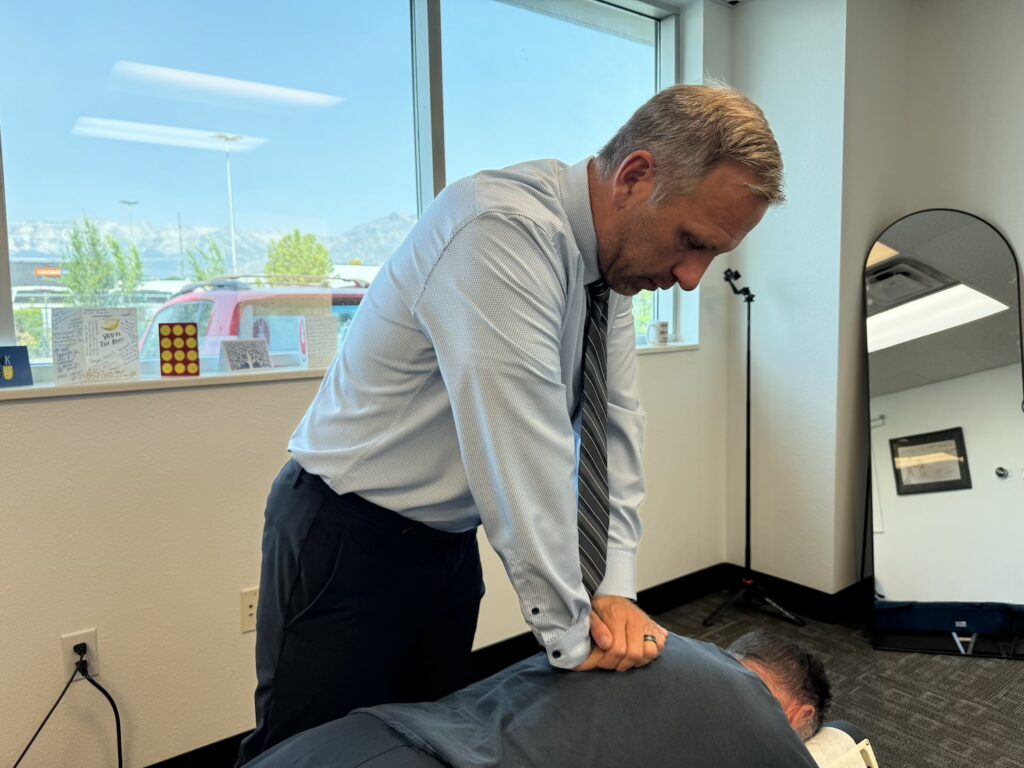
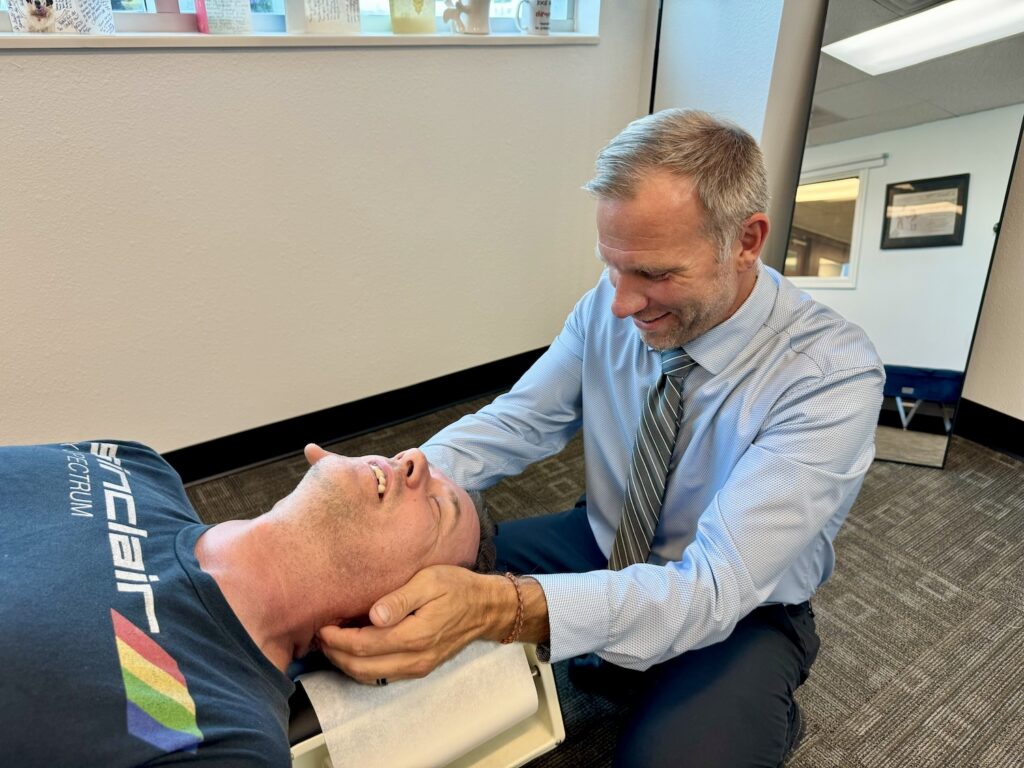
Chiropractic care is a primary, hands-on solution for many people with vertigo, especially when neck mechanics or BPPV are involved. At Life Aligned Chiropractic, we start with a careful history and exam to determine whether your dizziness is likely inner ear–driven, neck-related, or a combination. Then we create a plan focused on correcting the underlying mechanics.
What that may include:
- Precise spinal adjustments to restore healthy motion in the cervical joints. This helps normalize proprioceptive input and reduces muscular tension that can aggravate dizziness.
- Canalith repositioning guidance when BPPV is suspected. We help identify the involved ear and canal, then coach you through the right maneuver so you’re not guessing at home.
- Targeted movement strategies, posture coaching, and simple gaze-stabilization drills to retrain how your neck and balance systems work together.
Our goal is to address the root contributors—not just mask the sensation of spinning. We use a conservative, evidence-informed approach and coordinate with other providers when red flags point to non-musculoskeletal causes.
At-Home Remedies That Can Help
These home strategies are designed to be safe for most people with mild, familiar vertigo. If symptoms are new, severe, or different than usual, get evaluated before trying self-care.
- Calm a BPPV flare with gentle positioning: Many people feel better by avoiding sudden, large head movements for a day or two during a flare. Sleeping with your head slightly elevated (about 30–45 degrees) for the first night or two can reduce rolling-induced spins. If you’ve previously been shown the correct canalith repositioning maneuver for your specific ear and canal, you may repeat it at home. If you’re unsure which side is involved, see a chiropractor trained in vestibular assessment to avoid aggravating symptoms.
- Brandt–Daroff exercises for lingering positional dizziness: These drills can help your brain adapt to positional sensitivity. Sit upright on the edge of your bed. Turn your head about 45 degrees to the left, then quickly lie down on your right side. Hold until dizziness settles plus 30 seconds. Return to sitting, wait for any dizziness to ease, then turn your head 45 degrees to the right and lie on your left side. Hold again, then sit up. Repeat the sequence a few times if tolerated. Stop if symptoms become severe or you develop new neurological signs.
- Hydrate and steady your blood sugar: Even mild dehydration can amplify dizziness. Sip water consistently through the day. Pair fluids with regular, balanced meals or snacks to avoid dips in blood sugar that can add to lightheaded feelings.
- Gaze-stabilization and head-control drills: Start small: Hold a thumb at arm’s length, focus your eyes on your thumbnail, and slowly turn your head side to side while keeping your eyes locked on the target. Move only as fast as you can without provoking more than mild, brief symptoms. This helps your brain coordinate head and eye movements.
- Posture resets and neck relief: If your dizziness worsens with neck tension, take a quick break each hour. Sit tall, gently tuck your chin, and imagine growing an inch taller through the crown of your head. Place a warm compress at the base of your skull for 10 minutes to relax tight suboccipital muscles, or use cool packs if heat isn’t comfortable.
- Safer morning routine: When symptoms are active, get out of bed in stages. Sit on the edge for a few breaths, then stand. Use the bathroom light instead of bright overheads at first. Give your system a few minutes to settle before bending forward or looking up.
- Manage stress and breathing: Anxious breathing can heighten dizziness. Try slow nasal breaths: four seconds in, six seconds out, for one to two minutes. This settles the autonomic nervous system and can make motion sensitivity easier to handle.
Common Mistakes People Make
- Trying random YouTube maneuvers without knowing which ear and canal are involved. The wrong maneuver can make BPPV worse.
- Pushing through severe spins. Overloading your system can increase sensitivity and prolong recovery.
- Ignoring the neck. If stiffness or pain is present, unaddressed cervical issues can keep feeding dizziness.
When to See a Chiropractor in American Fork
As primary providers for spine and movement health, chiropractors are well positioned to evaluate vertigo that may be inner ear– or neck-driven. Reach out to Life Aligned Chiropractic if:
- You’ve had more than a couple of dizzy spells in a week, or symptoms last beyond a few days even with home care.
- Your vertigo keeps returning whenever you roll in bed or look up.
- You notice neck pain or stiffness tied to your dizziness.
- You want a clear diagnosis of which ear/canal is involved and personalized guidance for the right repositioning strategy.
Our team will examine your neck mechanics, check eye and head movement coordination, and perform simple positional tests to pinpoint the cause. Then we’ll map out a plan that may include cervical adjustments, guided maneuvers, and home exercises to keep you steady between visits.
When to Seek Immediate Medical Care
Although most vertigo is not dangerous, certain symptoms need urgent medical attention. Call 911 or go to the ER if your dizziness comes with any of the following:
- New, severe headache unlike any you’ve had before
- Weakness, numbness, trouble speaking, facial droop, or double vision
- Chest pain, fainting, or a rapid, irregular heartbeat
- Sudden hearing loss in one ear
- Head injury, neck trauma, or a recent fall
Chiropractic care is not emergency care. If you’ve had a medical evaluation and it’s safe to proceed, we’re happy to coordinate your follow-up.
Myths vs. Facts
- Myth: “Medication fixes vertigo.”
- Some medications can reduce nausea or motion sensitivity, but they do not reposition inner ear crystals or correct neck mechanics. For BPPV and neck-related dizziness, mechanical solutions generally work best.
- Myth: “If I wait it out, vertigo will always go away.”
- Some cases resolve, but recurring or stubborn vertigo often needs targeted care. The right maneuver or cervical treatment can make a big difference.
- Myth: “All dizziness is the same.”
- Dizziness has many causes. A focused exam helps determine whether your inner ear, neck, or both are the drivers—and guides the safest plan.
Final Thoughts from Life Aligned Chiropractic
Vertigo can be scary, but with the right plan it’s very manageable. As your local chiropractor in American Fork, our role is to be your first call for conservative, hands-on care that addresses how your spine, nervous system, and balance centers work together. Whether you need precise cervical adjustments, the correct canalith maneuver, or a simple home routine to keep episodes at bay, we’re here to guide you every step of the way.
If you live in American Fork—or nearby communities like Highland, Lehi, or Pleasant Grove—and you’re tired of the room spinning, reach out. Let’s get you steady again.
Frequently Asked Questions
Can I do the Epley maneuver at home?
Possibly, but it’s safest after a professional shows you which ear and canal are involved and confirms you don’t have contraindications. Doing the wrong side or technique can worsen symptoms.
How long does BPPV last?
Episodes often come in short bursts lasting seconds to a minute. With the correct repositioning maneuver, many people improve over days. Some cases recur and benefit from guidance.
Is chiropractic care safe for vertigo?
For many people with neck-related dizziness or BPPV, chiropractic evaluation and care are appropriate and well tolerated. Your chiropractor will screen for red flags and refer when needed.
Will drinking more water fix vertigo?
Hydration helps reduce lightheadedness and can support recovery, but it doesn’t reposition inner ear crystals. It’s one helpful piece of a broader plan.
Why is my vertigo worse when I roll in bed?
That pattern is common with BPPV. Crystal movement in the inner ear is often triggered by changes in head position, especially rolling or looking up.
Do I need imaging for vertigo?
Most people with straightforward BPPV or neck-related dizziness do not need imaging. Your chiropractor will advise if further testing is appropriate.
TL;DR
- Vertigo is often inner ear– or neck-related; both are conservatively addressed in chiropractic care.
- Home help: gentle positioning, Brandt–Daroff drills, hydration, gaze-stabilization, and posture resets.
- See a chiropractor if episodes persist, recur, or relate to neck pain/stiffness; get the right maneuver for your specific case.
- Seek emergency care for severe headache, neurological changes, chest pain, sudden hearing loss, or trauma.
- With a focused plan, most people can calm vertigo and return to steady, confident movement.
This article is educational and not a substitute for an in-person evaluation. If you’re unsure what’s causing your symptoms, schedule a professional assessment.