
Text Neck: Causes, Symptoms, and Chiropractic Care in American Fork
We all love the convenience of our phones and tablets, but hours of looking down can quietly train your neck and upper back into a painful pattern. At Life Aligned Chiropractic here in American Fork, we see this every week—students, professionals, parents, even kids—frustrated by tight shoulders, aching necks, and lingering headaches that often trace back to one habit: head-down screen time. In this article, I’ll explain what “text neck” is, why it happens, what to watch for, and how chiropractic care offers a direct, effective path to relief and long-term spinal health.
Table of Contents
- What Is Text Neck?
- Why Looking Down Strains Your Neck: Simple Biomechanics
- Signs and Symptoms You Might Notice
- How This Affects Kids, Teens, and Adults in American Fork
- How Chiropractic Care Corrects Text Neck at Life Aligned Chiropractic
- Practical Posture Fixes You Can Start Today
- When to See a Chiropractor
- Urgent Signs: When to Seek Medical Care
- Myths and Facts About Text Neck
- Final Thoughts for Our American Fork Community
What Is Text Neck?
Text neck refers to neck and upper back strain caused by repeatedly bending your head forward to look at screens. Over time, this posture irritates joints, tightens muscles, and can change the way your cervical spine moves and holds itself.
Text neck is a modern name for a very old problem: forward-head posture. Any time your ears drift in front of your shoulders for prolonged periods—like when you look down at a phone—your neck joints, discs, and muscles take on extra work. That extra load can lead to stiffness, soreness, and eventually changes in how your spine moves.
Think of your head like a bowling ball balanced on a stack of small joints (your cervical vertebrae). When it’s centered, your muscles share the work. When it hangs forward, your muscles must pull constantly, and small joints that prefer gliding motion start to feel compressed and irritated.
Why Looking Down Strains Your Neck: Simple Biomechanics
In neutral posture, your head sits over your shoulders and the load is distributed evenly through the cervical spine. As you flex your neck forward—looking down—the lever arm increases. That means the same head weight creates more torque on the joints and soft tissues. Muscles in the back of your neck and between your shoulder blades must fire all day just to hold you up.
Over time, this can contribute to joint restriction (reduced motion between vertebrae), muscle guarding (tightness and trigger points), and poor movement patterns. Many patients don’t realize the neck and upper back work as a team—so a stiff mid-back often forces your neck to do even more, turning a small habit into a bigger issue.
Signs and Symptoms You Might Notice
Text neck doesn’t always start with sharp pain. It often begins with subtle tension and fatigue. You might notice that your neck feels tired by mid-afternoon or that you’re rubbing your shoulders during meetings. Headaches after long screen sessions are common. Some patients report a dull ache at the base of the skull, a tight band across the top of the shoulders, or a pinching sensation when turning the head.
Other clues include stiffness first thing in the morning, needing to “pop” your neck for temporary relief, or feeling like you can’t sit at your computer without slumping. Left unaddressed, these patterns may lead to more frequent flare-ups, reduced range of motion, and recurring headaches.
How This Affects Kids, Teens, and Adults in American Fork
Here in American Fork, our daily routines often involve screens—classwork, remote meetings, online shopping, and social media. Kids and teens may look down at tablets or gaming devices for hours. Adults commute, text, and work from laptops at the kitchen table. These habits add up quickly.
Children and teens are still developing posture and coordination. Prolonged head-down posture can shape how their spines grow and move, which is why early evaluation is so valuable. For adults, chronic tightness can lead to performance issues at work or during workouts and reduce energy by the end of the day. The common thread: everyone benefits from a spine that moves well and holds itself efficiently.
How Chiropractic Care Corrects Text Neck at Life Aligned Chiropractic
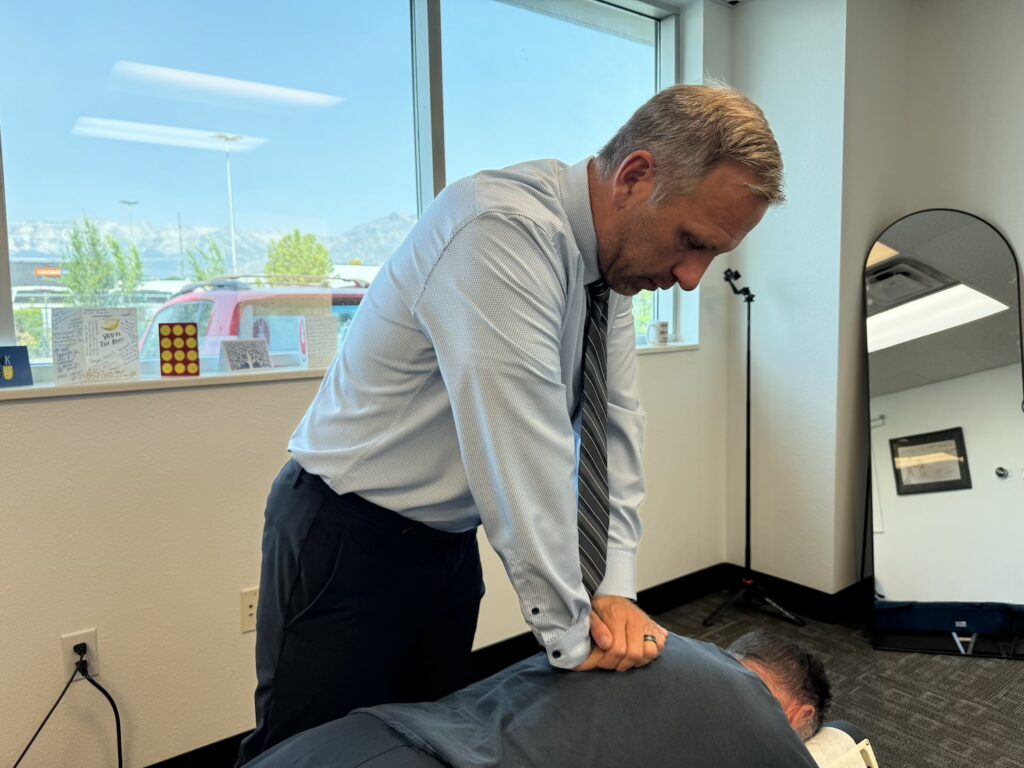
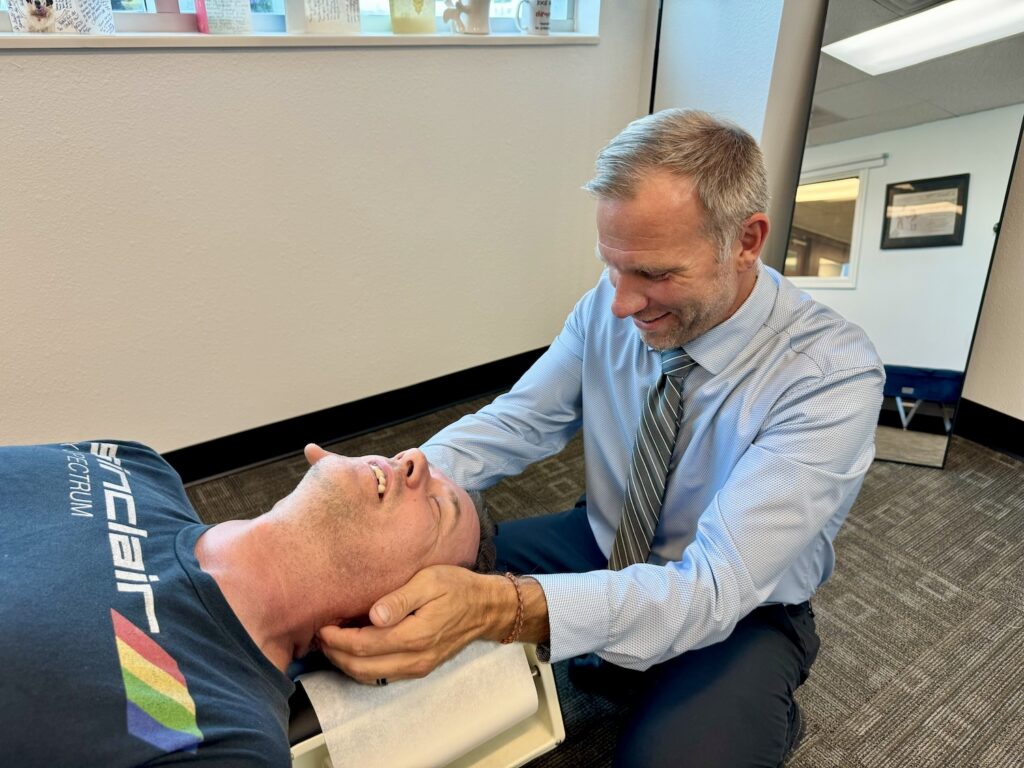
Chiropractic care is the frontline approach for text neck because it addresses the core problems: spinal alignment, joint motion, and neuromuscular control. At Life Aligned Chiropractic, we begin with a thorough evaluation—history, movement screening, and specific orthopedic and neurologic tests when indicated. If needed, we may recommend imaging after we assess your clinical findings. The goal is simple: find what’s not moving well, determine why, and create a plan to restore healthy function.
Here’s how we typically help:
- Targeted chiropractic adjustments: Gentle, precise adjustments restore motion to restricted cervical and thoracic joints. When the spine moves as designed, muscles don’t have to overwork to stabilize a stuck segment. Many patients notice improved range of motion and easier posture after care.
- Soft-tissue and mobility work adjunctive to adjustments: Tight muscles and fascia often reinforce poor posture. We use hands-on techniques and guided mobility work to reduce tension and retrain healthy movement around the adjusted segments.
- Postural retraining and ergonomic coaching: Adjustments open the door; daily habits keep it open. We’ll coach you on simple, sustainable strategies—phone and laptop positioning, seated posture, micro-breaks, and how to “stack” your head over your shoulders without straining.
- Home care that supports alignment: We prescribe focused mobility and strengthening drills to reinforce what we correct in the office. The goal is to build resilience so your spine can handle real life—work, school, and family time—without flaring up.
Research from reputable health organizations indicates that spinal manipulation can help some patients with neck pain and related headaches as part of conservative care. Evidence also suggests that staying active and improving movement patterns supports better long-term outcomes (see NIH/NCCIH overview on spinal manipulation). As always, results vary by individual, and care is tailored to your specific findings.
Practical Posture Fixes You Can Start Today
Small changes add up. You don’t need to abandon your phone or stop working at a computer. The key is to bring your screen up toward you and your head back over your shoulders. Practice short bouts of better posture throughout the day and sprinkle in movement—your neck will thank you.
| Common Device Habit | How It Stresses Your Neck | Simple Correction |
|---|---|---|
| Chin tucked to chest while texting | Prolonged flexion overloads joints and muscles | Raise phone to eye level; keep ears over shoulders |
| Working on a laptop at the kitchen table | Screen too low pulls head forward | Use a stand or stack of books; add external keyboard/mouse |
| Tablets flat on the lap | Forces deep neck bend | Prop with a case or pillow at a 45–60° angle |
| Binge-watching on the couch | Slouched spine and forward head | Sit upright with a small pillow behind mid-back; screen at eye height |
| Long drives with head jutting forward | Neck muscles work overtime | Adjust headrest; gently retract chin so head touches headrest |
One more tip: set a gentle reminder on your phone for posture check-ins. Every 30–60 minutes, scan quickly—are my ears over my shoulders? Is my screen near eye level? A few seconds of awareness can prevent hours of strain.
When to See a Chiropractor
If you’re noticing recurrent neck tightness, headaches after screen time, or stiffness that keeps coming back, it’s time for a chiropractic evaluation. The sooner we address the mechanics, the easier it is to resolve. Don’t wait for a full-blown flare-up.
- Pain, stiffness, or headaches that persist beyond 1–2 weeks despite self-care
- Neck pain that keeps returning or is affecting sleep, work, or workouts
- Limited ability to turn your head while driving or looking over your shoulder
- Tingling, achiness, or heaviness creeping into the shoulders or upper back
- Kids or teens with noticeable forward head posture that doesn’t improve with reminders
Chiropractic is not emergency care. If your history or exam suggests something outside our scope, we’ll coordinate the appropriate referral. Most text-neck cases respond well to conservative chiropractic management focused on restoring motion, improving posture, and building better habits.
Urgent Signs: When to Seek Medical Care
Some symptoms warrant prompt medical evaluation. Seek urgent care or emergency attention if you experience severe, sudden-onset neck pain after trauma, progressive weakness or numbness in the arm or hand, loss of coordination, fever with neck stiffness, unexplained weight loss, or new severe headache unlike your usual pattern. If you’re unsure, call us—our team will help you determine the best next step.
Myths and Facts About Text Neck
- Myth: If I just stretch more, my neck pain will go away. Fact: Stretching can feel good, but if joints are restricted and alignment is off, stretching alone won’t correct the cause. Chiropractic adjustments address joint motion first, then stretches and strengthening hold the improvements.
- Myth: Text neck only affects people who use phones all day. Fact: Any repeated forward-head posture—from reading, crafting, laptop work, or gaming—can create the same strain. The pattern matters more than the device.
- Myth: Good posture means sitting up rigidly. Fact: Healthy posture is dynamic. Your spine should move. The goal is to stack your head and ribcage efficiently, then change positions often throughout the day.
- Myth: If my neck hurts, I should avoid moving it. Fact: Gentle, guided motion is usually helpful once serious issues are ruled out. We’ll show you how to move safely as you heal.
Final Thoughts for Our American Fork Community
At Life Aligned Chiropractic, we love helping families in American Fork keep their spines strong and their lives active. Text neck is common, but it’s not inevitable. With precise chiropractic care and practical daily strategies, you can feel better now and protect your neck for the long term.
If you’re dealing with neck tension, headaches, or stiffness from screen time, we’re here to help. Reach out with questions or stop by for an evaluation. Clear answers and a plan you can trust make all the difference.
FAQs
What exactly causes text neck?
Repeated forward-head posture—usually from looking down at screens—stresses the joints and muscles of your neck and upper back. Over time, this creates tightness, irritation, and inefficient movement.
Can text neck cause headaches?
Yes. Tight muscles and irritated joints at the top of the neck often refer pain into the head, leading to tension-type or cervicogenic headaches for some people.
How soon will I feel better with chiropractic care?
It varies. Many patients notice easier movement and less tension early in care. The number of visits depends on how long the problem has been present and your daily habits.
Are neck adjustments safe?
For most patients, chiropractic adjustments performed by a licensed chiropractor are considered safe. We evaluate you first and use techniques appropriate for your age, health history, and exam findings.
Will I need X-rays?
Not always. Imaging is recommended when your history or exam suggests it would change management. We decide this together after your evaluation.
How can I help my child avoid text neck?
Encourage screens at eye level, frequent movement breaks, and activities that build postural strength. If you notice persistent forward-head posture, schedule a posture and spinal check.
TL;DR
- Text neck is forward-head posture from looking down at screens, stressing your cervical spine over time.
- Chiropractic care at Life Aligned Chiropractic addresses the root issues—joint motion, alignment, and movement habits.
- Improve posture by bringing screens to eye level, stacking ears over shoulders, and taking regular movement breaks.
- See a chiropractor if pain or headaches persist, keep returning, or limit your daily activities.
- Seek medical care urgently for severe symptoms after trauma, progressive weakness or numbness, fever with neck stiffness, or a new, severe headache.